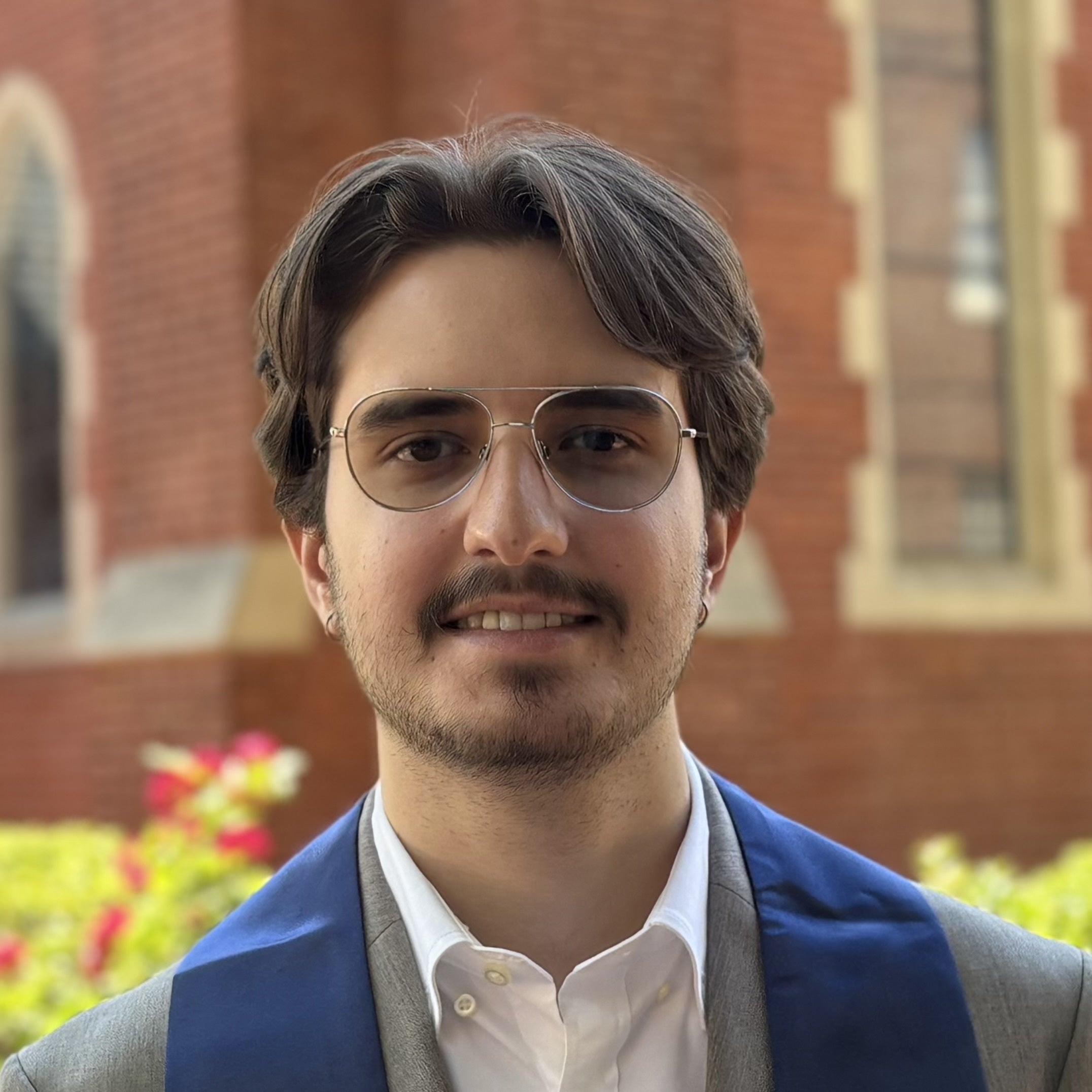
Benjamin Fishbein’s honors thesis, “The Body, Glorified: Disability and Saints’ Cults in Late Antique Gaul,” examines how ecclesiastical elites understood impairment, sin, healing, and sanctity in late antique Gallic shrine communities. The thesis argues that saints’ shrines functioned as sacramental spaces where disability could be interpreted, healed, or socially transformed. By combining hagiography, theology, legal sources, liturgical evidence, and archaeology, Fishbein explores how miracle narratives shaped both religious ideas about the body and the social lives of people with impairments. Mentor: Professor Timothy Newfield. Congratulations, Benjamin!
Camille Deschapelles
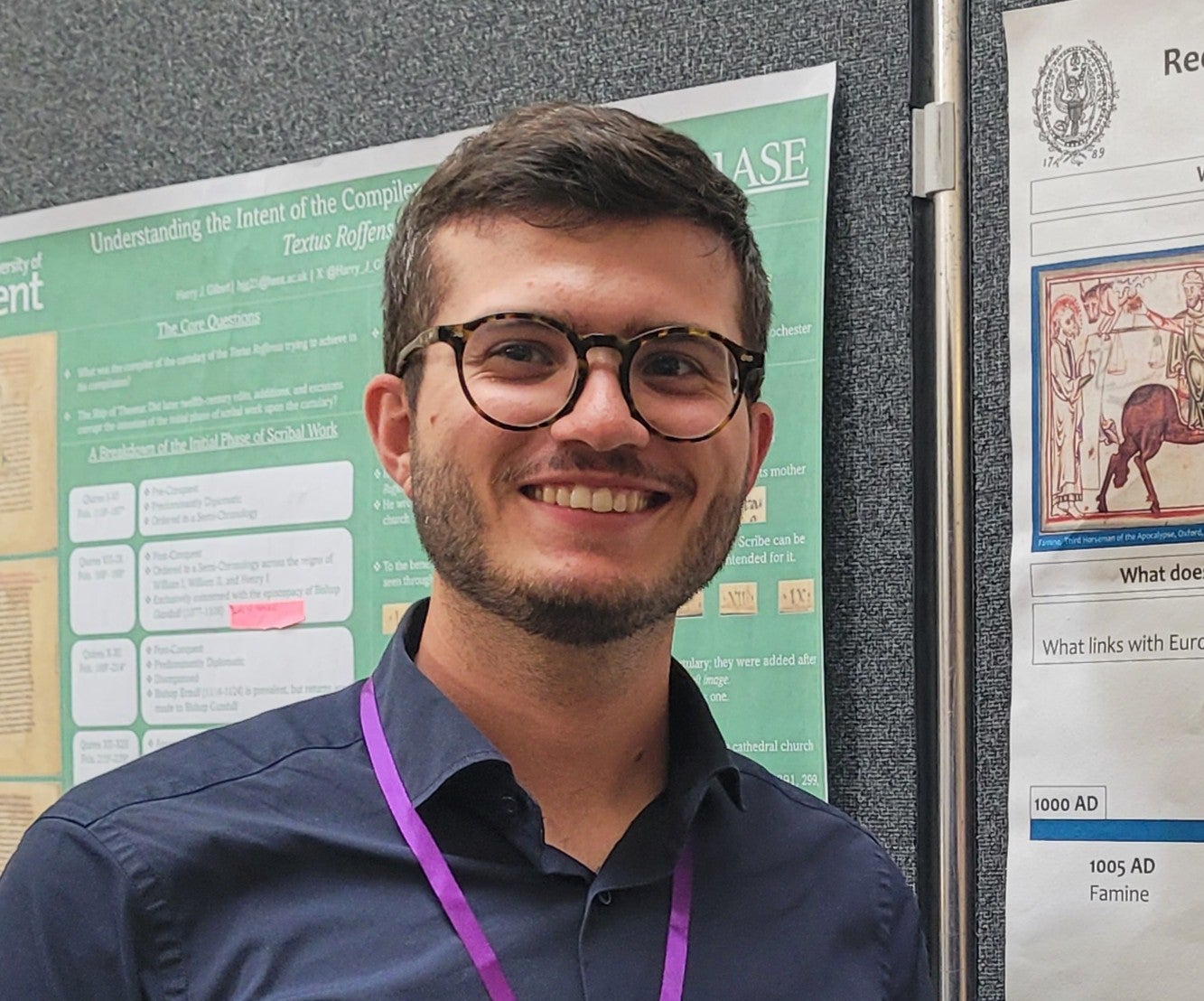
Camille Deschapelles’ thesis, submitted for Honors in English, “Believing in the Grail: Affective Medievalism from Chrétien de Troyes to Dan Brown,” asks the deceptively simple question: what has kept the Holy Grail alive in the Western imagination for eight centuries? Rather than tracing the Grail’s symbolic meaning, Camille argues that the legend endures because of what it makes audiences feel: the almost-grasp of something ancient, enchanted, and just out of reach. Organized as a literary diptych, the thesis pairs the Grail’s first recorded literary appearance in Chrétien de Troyes’ twelfth-century romance Perceval with its most influential modern reinvention in Dan Brown’s The Da Vinci Code. Both texts, Camille shows, engineer belief through strikingly similar mechanisms, revealing that the emotional experience of reaching toward a medieval past—what scholars call medievalism—is as alive today as it was in the twelfth century. Mentor: Professor Sarah McNamer. Congratulations, Camille!
2026 Travel Awards
Luca Barison
Luca Barison’s research paper, “Time of Volcanoes: Dating and Understanding High Medieval Volcanic Eruptions,” considers how recent scientific advances are reshaping the environmental history of medieval Europe. Drawing on evidence from ice cores, tree rings, and pollen cores, it reviews how paleosciences can identify eruptions and assess their effects on vegetation, soil, and climate. Barison also asks how carefully historians should interpret famines, crop failures, and epidemics that coincide chronologically with volcanic events. The paper highlights the value of interdisciplinary methods for reconstructing medieval environmental change and proposing new temporal frameworks for the study of medieval ecologies. Congratulations, Luca!
Rachel Singer
Rachel Singer’s research project, “Did Britain and Ireland Have a Late Antique Little Ice Age? What We Know (and What We Don’t) About Sixth-Century Climate Change in Northwest Insular Europe,” reassesses claims that sixth-century cooling caused famine, disease, and cultural disruption in Britain and Ireland. It emphasizes the limited paleoclimatological evidence for the region and asks how severely, where, and whether contemporaries experienced the Late Antique Little Ice Age. Singer will present this paper in late June at the workshop “Ancient weather perspectives. Perceptions, representations and realities (400–700)” at Radboud University in Nijmegen, from 24-26 June 2026. Congratulations, Rachel!
2025 Travel Awards
Jack Willis
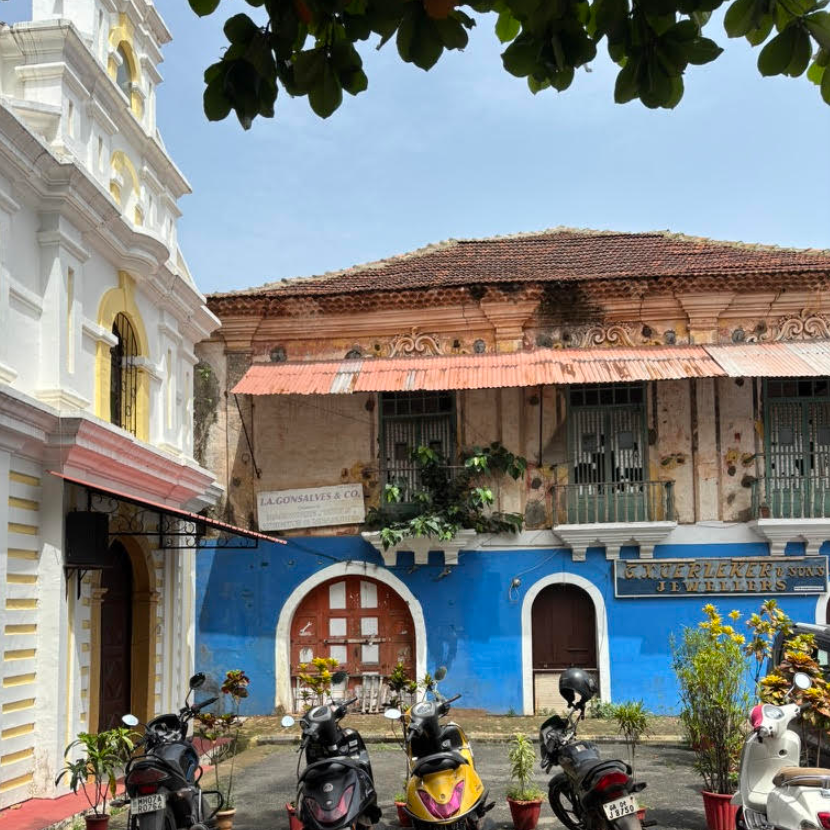
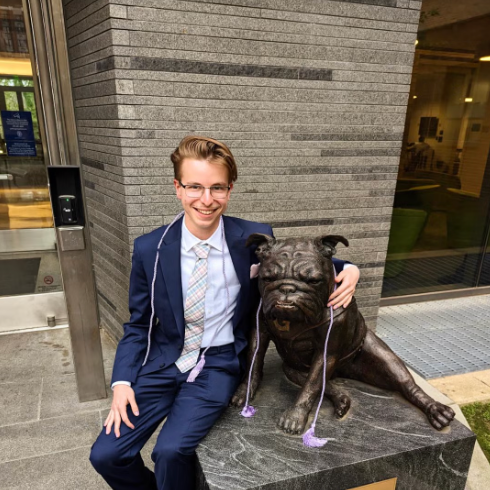
Jack Willis’s summer research project, “Traces of Portugal’s Medieval Worldview in Asia,” offered a comparative examination of Portuguese colonial institutions in Sri Lanka and India. With an emphasis on colonial-era connections to the religious, political, and urban structures of Portugal’s Middle Ages, Jack’s project challenged the standard delineation between “medieval” and “early modern”. With the support of the Global Medieval Studies Program, Jack spent a month combing through niche museums, looking over archives, and exploring historical sites like Galle Fort and the lush estates of Goa’s backwaters. Inspired by his research, Jack’s next endeavor in the Lusophone world will take him to Timor-Leste as a Fulbright grantee. Mentors: Professor Ananya Chakravarti and Professor Coilin Parsons. Congratulations, Jack!
Luca Barison
Luca Barison’s research paper, “Barbarians at the Gates, Barbarians Inside the Gates. The Wewelsburg and the Nazi Barbaric Middle Ages,” explores Wewelsburg Castle as a key site of Nazi medievalism and political legitimation. It examines Heinrich Himmler’s refurbishment of the castle as an esoteric, pseudo-historical center that mobilized racist and nationalist visions of the Middle Ages. The paper traces how Nazi symbolism gave the “barbarian” a dual role: patriotic defender of German freedom and threatening eastern invader, linking Wewelsburg to broader Germanic myths, monuments, and medieval imaginaries. Congratulations, Luca!
2024 Awards for Academic Excellence
Bryna Cameron-Steinke
In her research paper “A Series of Bad Dates: Managing the Uncertain Temporal Resolution of Textual and Palaeobotanical Evidence from Early Medieval Brittany,” Bryna Cameron-Steinke investigates how early medieval Breton communities shaped, used, and imagined their environments between c. 500 and 1000 AD. The paper brings together written sources, archaeological reports, and scientific evidence from paleoclimatology, palaeogenomics, and palynology to trace changing relationships between people and landscape. It argues that Brittany’s ecology constrained agriculture, mobility, and settlement, while Bretons actively managed marshes, woodlands, animals, crops, and environmental threats. Congratulations, Bryna!
2023 Awards for Academic Excellence
Kelvin Doe
Kelvin Doe’s thesis, submitted for Honors in History, “Rewriting Inconvenient Truths: How Charlemagne Rewrote his Ancestry to Justify his Leadership,” tackles a well-trodden topic — history writing in Frankish Europe. But despite the quantity of scholarship on the topic, he has crafted a sharply original interpretation of the agendas underlying the writing and rewriting of elite Frankish genealogies. His thesis is rooted in a careful reading of a range of early medieval texts and multiple generations of modern scholarship. The thesis demonstrates clearly that ancestry could be (and was) crafted to suit specific purposes, and that we, as moderns, have on occasion been too willing to accept early medieval accounts of lineage at face value, just as early medieval authors hoped their readers would. Mentor: Professor Tim Newfield. Congratulations, Kelvin!
Brett Guessford
As a Global Medieval Studies minor, Brett completed a capstone project titled “Medieval Cultures of Resistance: Building a Framework to Explore Everyday Aesthetic Defiance against Foreign Invasion through the Examples of Irish and Chinese Societies from the Twelfth to the Fourteenth Century.” This research project, submitted to MVST 348, Advanced Research in Global Medieval Studies, focused on aspects of the aesthetics of material culture to learn more about a society’s cohesiveness and sense of self-identification in the face of external threats. With case studies from medieval Ireland and China, Brett explored how resistance to oppression was expressed in art, symbology and customs. Mentor: Professor Sarah McNamer. Congratulations, Brett!
Katie Hawkinson
Katie Hawkinson’s thesis, “Reframing Citizenship and Social Class: Christine de Pizan’s Politics in Sixteenth-Century English Translation,” was submitted to the Department of History. Katie offers the first look at the political meaning of the English translation and later publication, in 1521, of two of Christine de Pizan’s works. Scholars have long treated the literary side of Christine’s works, but Katie shows how Christine’s most famous work, Le livre de la cité des dames, has never gotten sufficient attention for its daring political assertion of women’s political rights. The French cité was the translation of the Latin civitas, or political community of citizens. The second work to appear in 1521 was her Livre du corps de policie [1406] which provided the standard French vision of the body politic for the next two centuries. Christine’s literary work got to England in her lifetime and Anthony Woodville, brother of Elizabeth, who married Edward VI, translated Christine’s work. Katie shows how the English translations radicalized Christine’s vision by offering a distinctive view of the “policie” of her title and by modifying Christine’s negative view of overly democratic political participation. Katie relates these texts to contemporaneous English ones, and shows the critical role of women, like Katherine of Aragon, in popularizing Christine in England. Mentor: Professor Jim Collins. Congratulations, Katie!
Thomas Ronan
Thomas Ronan’s honors thesis, submitted to the Department of Italian, investigates a previously unexamined interpretive issue concerning Cato and Matelda, two major figures in Dante’s Purgatorio. Written in Italian, as Similitudini concettuali e funzionali fra Catone e Matelda nel Purgatorio dantesco [“Conceptual and Functional Ties between Cato and Matelda in Dante’s Purgatory”], Thomas’s thesis deploys an interdisciplinary approach combining historical, philosophical, and literary perspectives to provide an interpretation grounded in solid Dante scholarship. Mentor: Professor Francesco Ciabattoni. Congratulations, Thomas!
Dan Sachs
Dan Sachs wrote his senior thesis for Jewish Civilization on the twelfth-century poet, Judah Halevi. Titled “Judah Halevi: A National Poet at the Edge of His Nation,” Dan’s thesis looks at the themes of longing and despair in Halevi’s poetry, considering the longing for a deeper bond with God as well as the difficulties of living as a subjugated minority among Christians and Muslims. In his analysis of both themes, Dan raises questions about both the universal and the particularly Jewish aspects of religious and political despair. Mentor: Professor Jonathan Ray. Congratulations, Dan!
Mel Smith
Mel Smith’s honors thesis for her degree in Global Medieval Studies is notable for its interdisciplinarity and reassessment of several longstanding beliefs about western Steppe peoples integral to narratives about the decline of the Roman empire and Europe’s ‘migration era’. The crossings of the Danube of the Huns and Avars are often discussed but rarely explored. Here they are re-read in many Latin and Greek texts and situated into many environmental contexts. Though environmental determinism remains fashionable in late antique studies, Mel’s bucks the trend, arguing, with written and paleoclimate evidence considered, that multiple factors explained why Steppe incursions happened when they did. And instead of zeroing in on horses, the focus turns, surprisingly, to boats. The title of her 145-page thesis is “Hold Your Horses, the Huns Used Boats?: The Dynamic Feedback Loops Between Steppe Incursions, the Danube River, and the Eastern Roman Empire.” Mentor: Professor Tim Newfield. Congratulations, Mel!